

Orcas are hunting young great white sharks for their livers

Get the Popular Science daily newsletter💡
Breakthroughs, discoveries, and DIY tips sent every weekday.
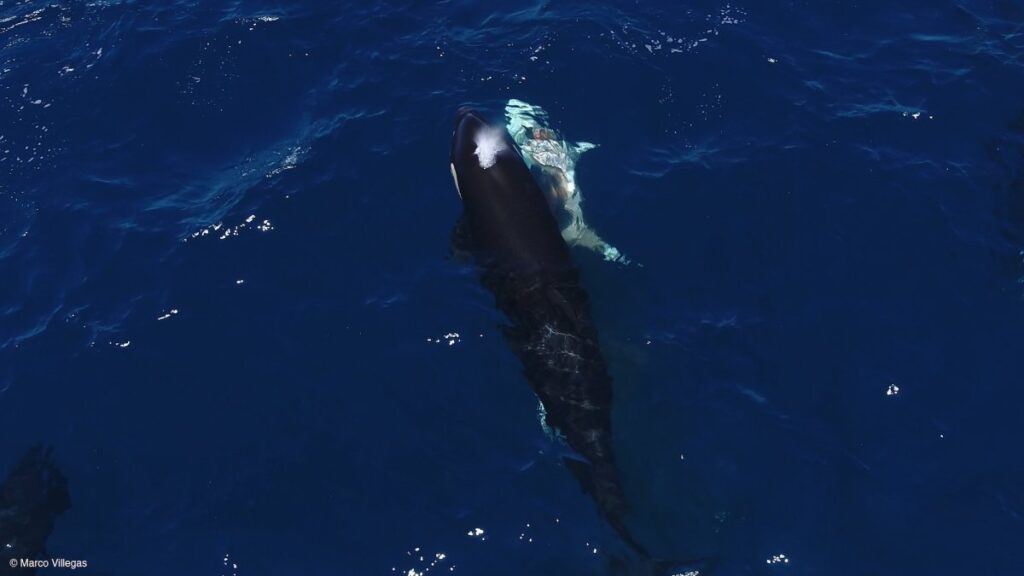
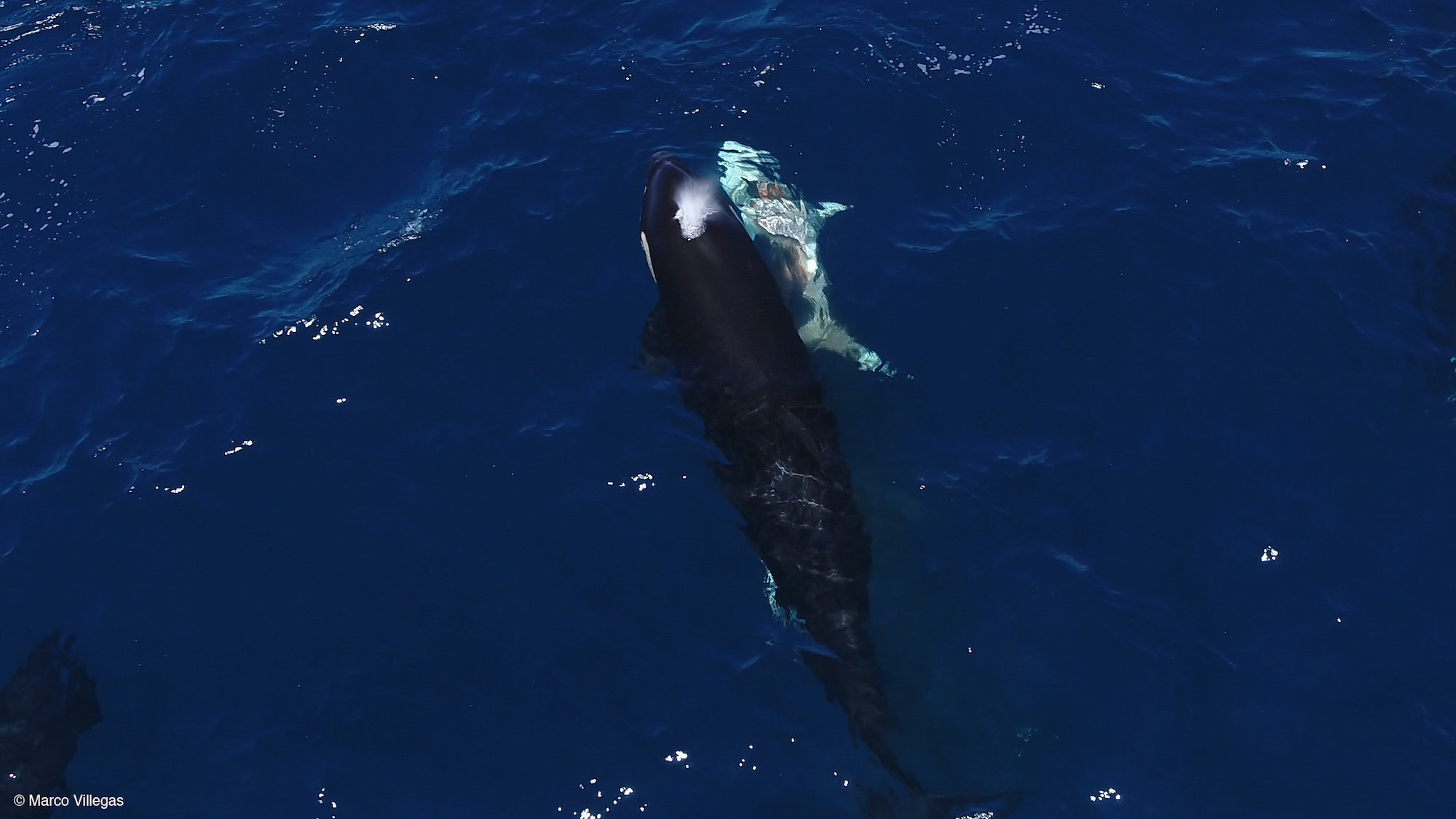
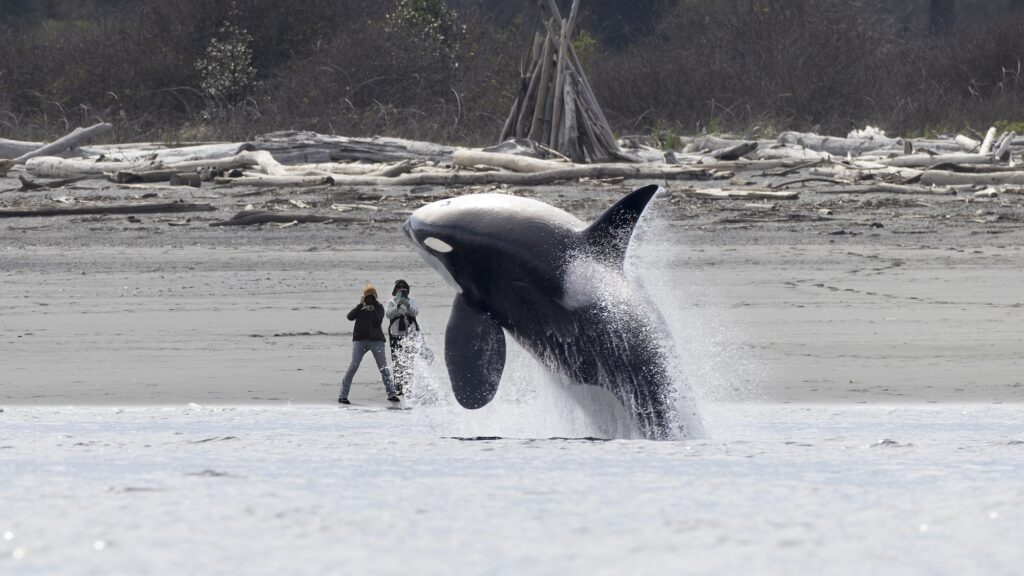
Orca whales are skilled pack hunters with an ever-growing list of prey. Some killer whales devour other marine mammals like seals, while others primarily dine on salmon. Recently, ocean researchers discovered that the apex predators aren’t afraid of taking on equally formidable foes—great white sharks. Now, a study published on November 3 in the journal Frontiers in Marine Science documented even more remarkable hunting behavior. In the Gulf of California, members of the much-studied Moctezuma’s pod were observed killing juvenile white sharks by flipping them upside-down to feast on their energy-packed livers.
The latest observations suggest that orcas may be incorporating great white sharks into their diets more than marine biologists realized, but the researchers stopped short of making any definitive conclusions. However, study co-author Erick Higuera Rivas thinks it’s a possibility.
“I believe that orcas that eat elasmobranchs—sharks and rays—could eat a great white shark, if they wanted to, anywhere they went looking for one,” the project director at Conexiones Terramar and Pelagic Life said in a statement. “This behavior is a testament to orcas’ advanced intelligence, strategic thinking, and sophisticated social learning, as the hunting techniques are passed down through generations within their pods.”
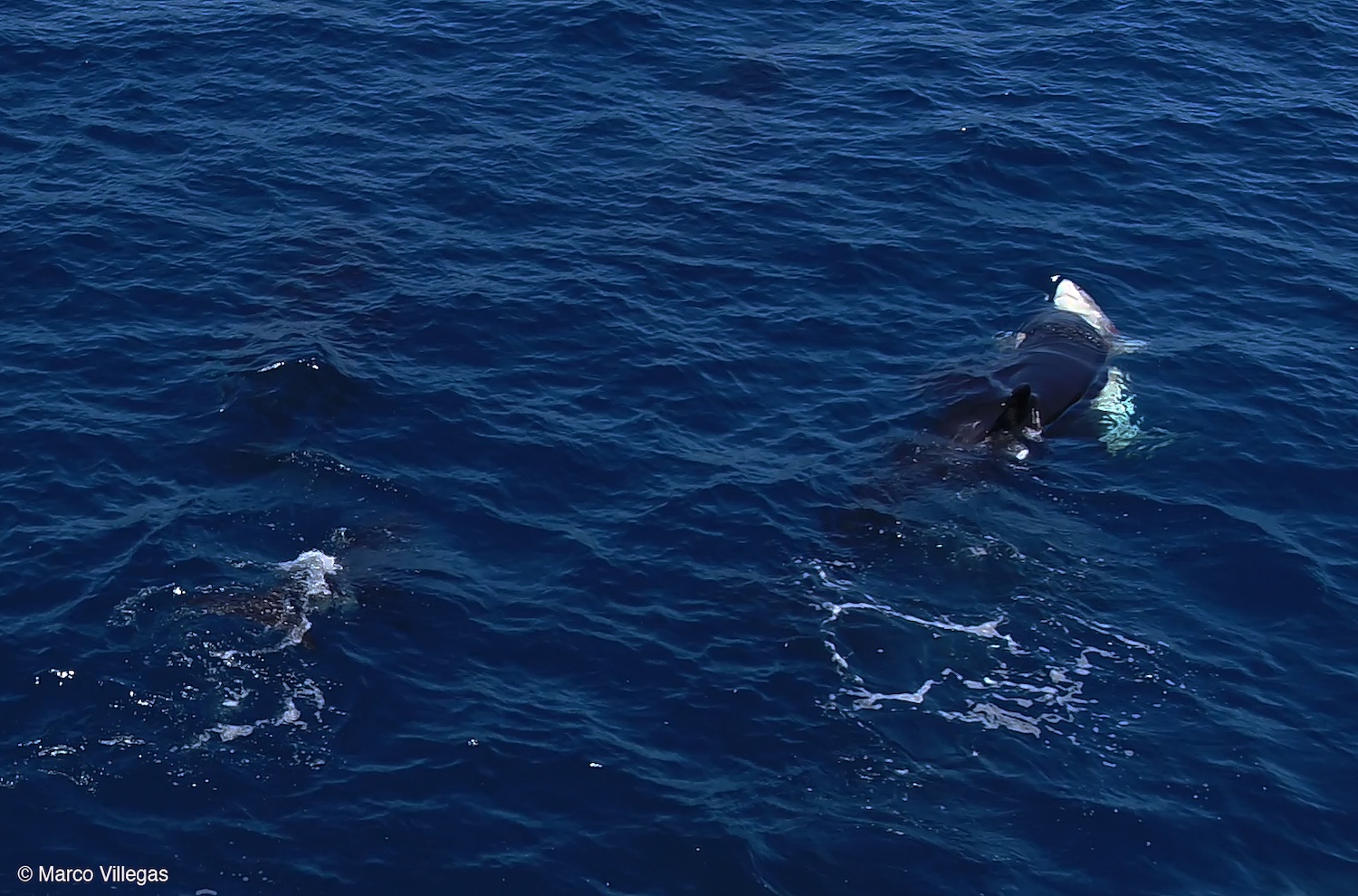
Regardless, Rivas and colleagues know for certain that at least some members of Moctezuma’s pod in the Gulf of California regularly pursue great whites. In 2020, the team documented two separate hunts that collectively resulted in three white shark deaths during routine orca monitoring. In the first instance, five orcas ambushed a juvenile great white shark, then pushed it to the surface before working collaboratively to flip it onto its back. The whales and their prey soon disappeared underwater, with only the attackers reappearing later—with chunks of the shark’s liver in their mouths. Not long after, they repeated the strategy with another young great white. Another documented great white shark feast took place two years’ later, and followed similar steps.
Turning sharks upside-down isn’t simply to disorient them. Doing so induces tonic immobility, effectively paralyzing them and altering their environmental awareness.
“This temporary state renders the shark defenseless, allowing the orcas to extract its nutrient-rich liver and likely consume other organs as well, before abandoning the rest of the carcass,” said Rivas.
The sharks’ injuries imply that the pod’s orcas have developed this signature technique as a way to reduce the chance of being bitten. Researchers believe focusing on juvenile targets might also be easier than taking on a full-sized adult shark.
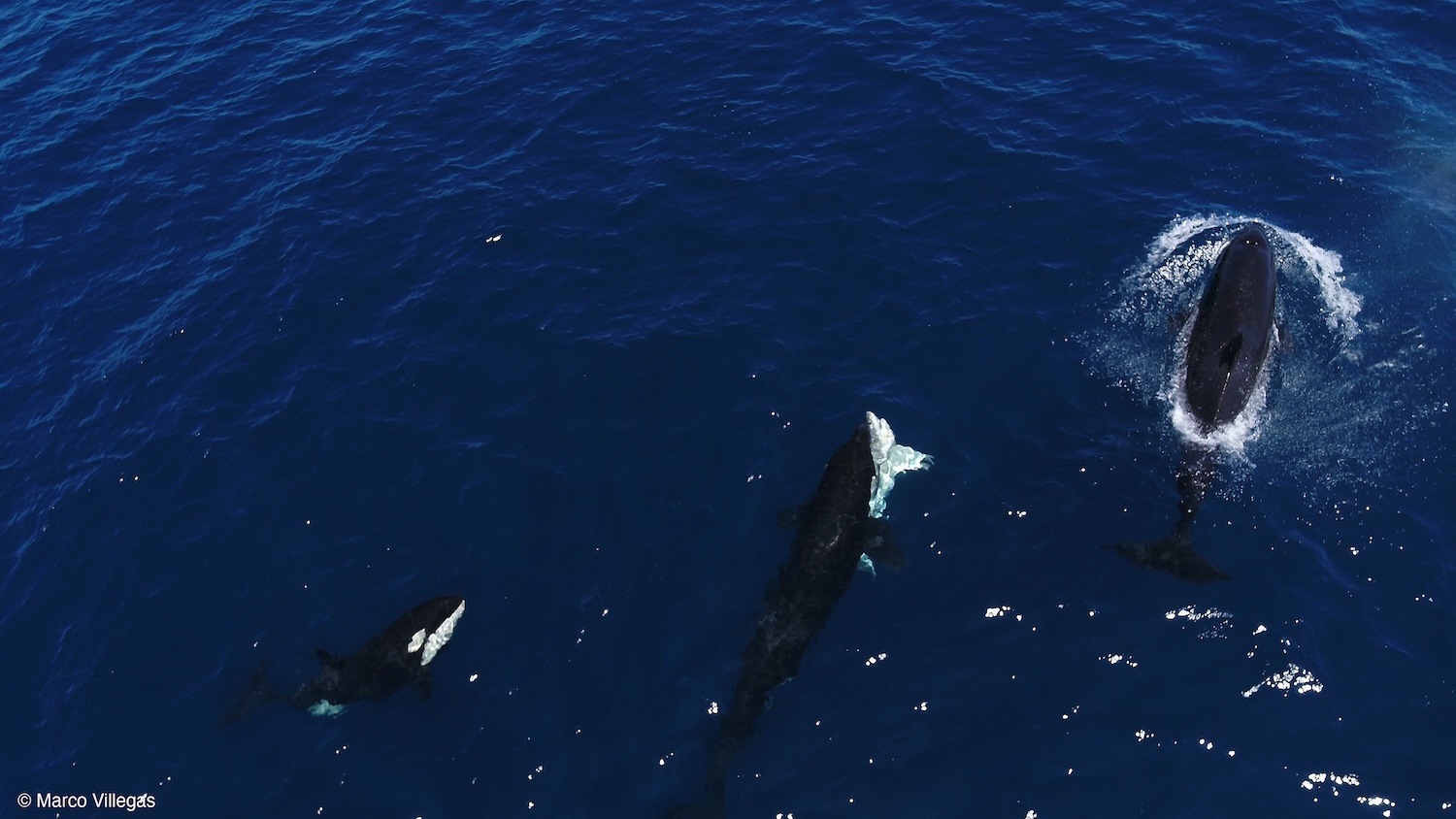
“Adult white sharks react quickly to hunting orcas, completely evacuating their seasonal gathering areas and not returning for months. But these juvenile white sharks may be naive to orcas,” said study co-author Salvador Jorgensen. “We just don’t know yet whether white shark anti-predator flight responses are instinctual or need to be learned.”
Great white sharks may not be orcas’ first choice of prey. Instead, they could be meals of opportunity for this pod. Shifting climates along with events like El Niño have likely altered white shark nursery regions, thereby increasing their presence in the Gulf of California. This may be what ultimately led to initial run-ins with Moctezuma’s pod. Now, juvenile sharks may present a seasonal addition to the orcas’ diets.
All of this remains conjecture for the time being. The authors say that more detailed surveys are needed before offering concrete answers. Even so, it’s at least abundantly clear by now that when push comes to shove, orcas will willingly take on some of the ocean’s most terrifying predators.

2025 Home of the Future Awards
Clever cooking tools, unique appliances, smart home systems, and everything else you’ll want in your home going forward.

Responses